How to Improve Employee Focus and Workplace Productivity
Keeping people focused at work is not just about asking them to do more. It is about making work clearer, calmer, and easier to manage.
When employees know what matters, have time to think, and are not pulled in ten directions at once, productivity improves. The good news is that you do not need a complete workplace overhaul to make this happen. Small, practical changes can make a big difference.
This guide breaks down simple ways to help your team stay focused, work better, and feel more supported at the same time.
Key Takeaways
- Set clear goals so people know what matters most.
- Give employees more ownership and avoid micromanaging.
- Protect focus time by reducing pings, alerts, and constant interruptions.
- Measure results, not just hours worked.
- Use regular feedback to keep people on track and engaged.
What do employee productivity and focus actually mean?
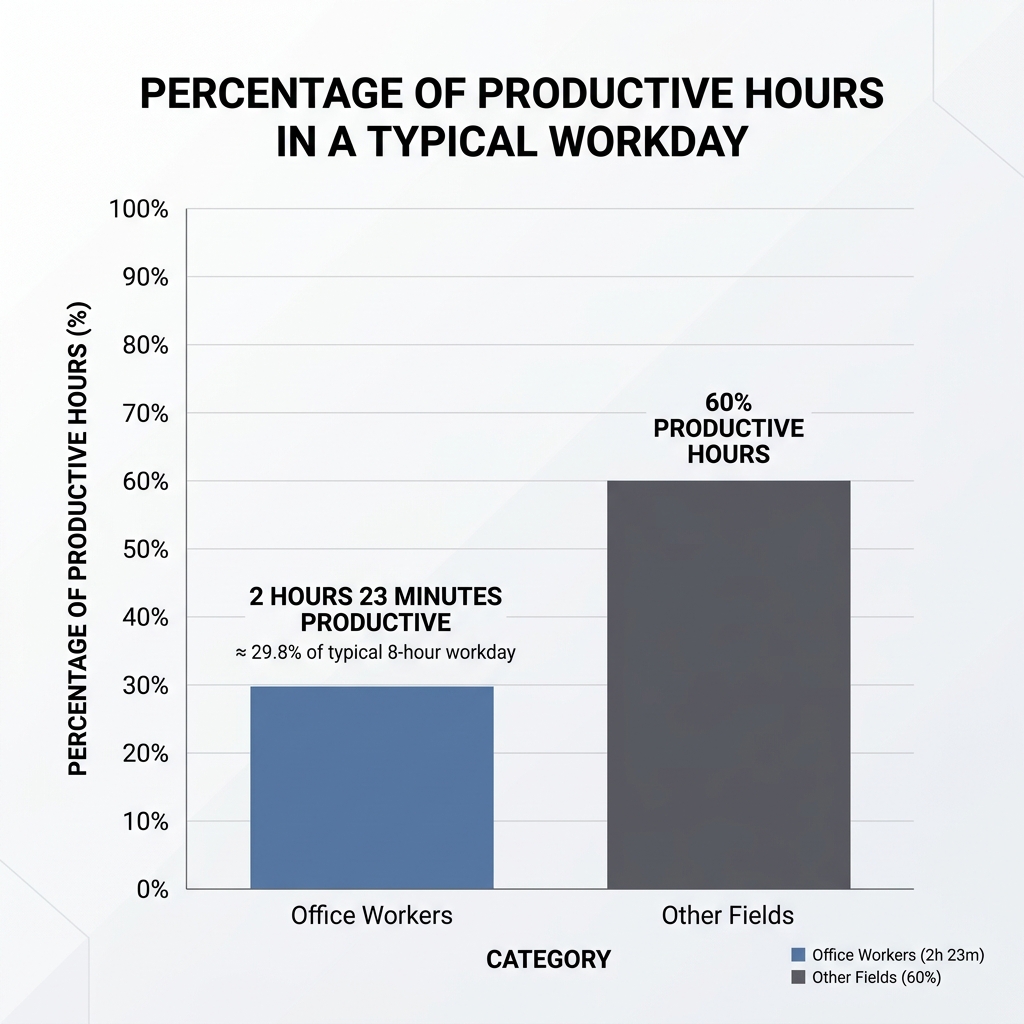
Employee productivity is about how well someone gets important work done in a set amount of time. It is not just about being busy. It is about doing useful work that moves the business forward.
Focus is the ability to give full attention to one task without getting distracted.
Here is the simple version:
- Productivity = doing valuable work well
- Focus = staying on one thing long enough to do it properly
A productive employee is not always the person who works the longest hours. More often, it is the person who uses their time, energy, and attention well.
Without focus, people fall into reactive work, such as:
- replying to emails all day
- answering chat messages
- jumping between tasks
- attending too many meetings
These things can feel productive, but they often stop real progress. That is why leaders need to treat focus like a limited resource and protect it.
What are the most common focus killers and productivity barriers?
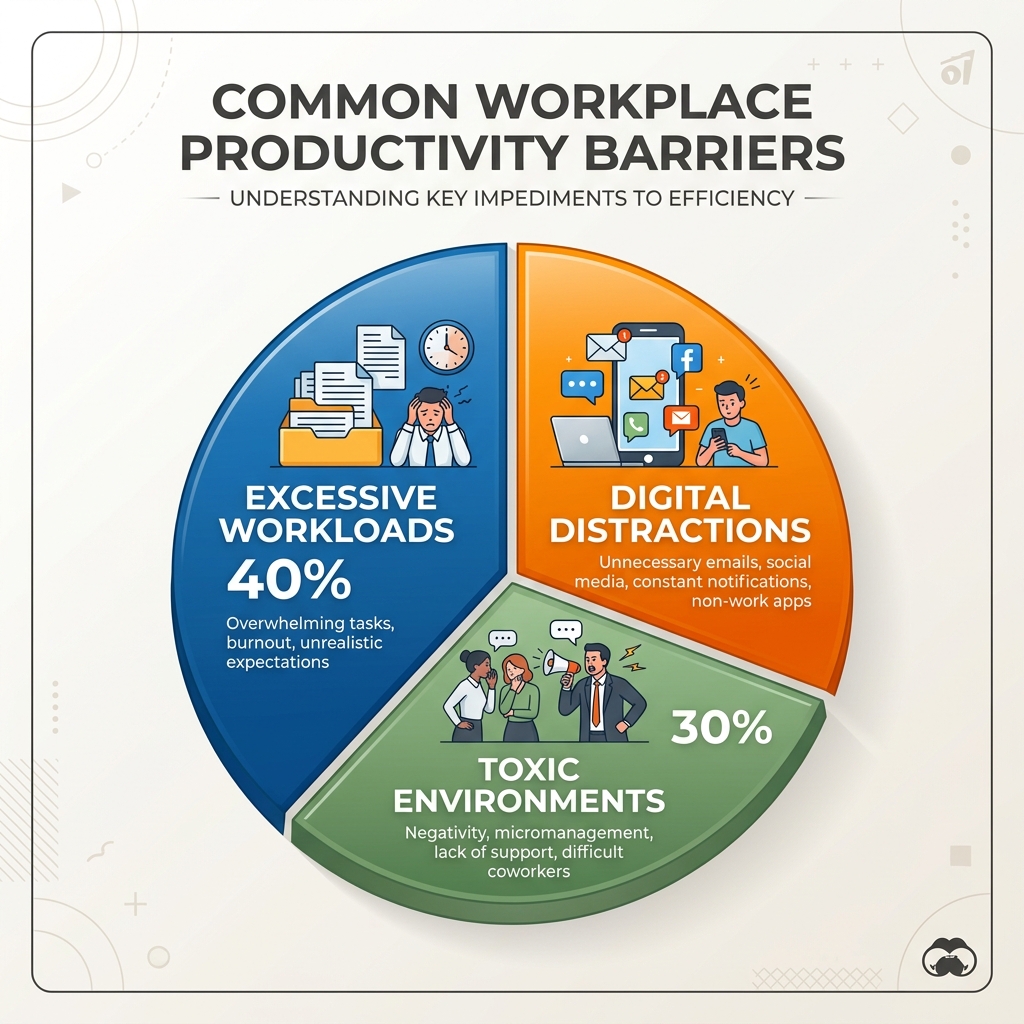
Most productivity problems come from a few common issues. The biggest ones are:
- too much work
- unhealthy team culture
- constant digital distractions
If you want to improve performance, start by spotting what is getting in the way.
How does an unmanageable workload destroy focus?
When people have too much on their plate, they stop working with clarity. Instead, they bounce from one task to the next, trying to keep up.
This leads to:
- stress
- rushed work
- more mistakes
- poor concentration
- lower quality output
When employees feel they can never catch up, focus drops fast. They spend more time reacting and less time thinking.
What helps:
- review workloads regularly
- set realistic deadlines
- prioritize the most important tasks
- remove or delay low-value work
If everything is urgent, nothing gets proper attention.
Why do toxic environments ruin workplace performance?
People do their best work when they feel safe, respected, and supported.
A toxic work environment does the opposite. It drains mental energy and makes it hard to focus on the actual job.
Common signs include:
- tension between team members
- fear of speaking up
- blame-heavy management
- constant negativity
- unclear expectations
When employees are busy managing stress or workplace politics, they cannot give their full attention to meaningful work.
A healthier culture makes room for:
- honest communication
- trust
- better teamwork
- fewer distractions
- stronger focus
How do digital distractions prevent deep work?
Emails, chat apps, pop-up alerts, and phone notifications can break concentration all day long.
Even a quick interruption can throw someone off. Then it takes time to get back into the task.
Common digital distractions include:
- nonstop email notifications
- chat messages that expect instant replies
- frequent calendar alerts
- open-plan office noise
- unnecessary app notifications
This creates a reactive work style, where people are always responding but rarely making real progress.
To reduce this, businesses can:
- set response-time expectations
- encourage focus blocks
- reduce non-urgent messages
- normalize delayed replies for low-priority requests
How can strategic solutions enhance workplace performance?
If you want better focus and stronger output, you need more than quick fixes. You need a workplace setup that helps people do good work consistently.
That usually comes down to four things:
- clear expectations
- less micromanagement
- strong culture
- better work-life balance
How do transparent expectations and SMART goals drive results?
People work better when they know exactly what is expected of them.
Clear goals remove guesswork. They help employees understand what matters, what success looks like, and where to put their energy.
SMART goals are useful because they are:
- Specific
- Measurable
- Achievable
- Relevant
- Time-bound
Instead of saying, “Improve client service,” say, “Respond to all client emails within one business day for the next quarter.”
That kind of clarity helps people:
- focus faster
- prioritize better
- measure progress
- stay accountable
When expectations are vague, people waste time trying to work out what matters most.
Why should managers empower employees and stop micromanagement?
Micromanagement slows everything down.
When employees feel watched too closely, they often:
- hesitate to make decisions
- wait for approval
- lose confidence
- feel less motivated
On the other hand, trust builds ownership.
When people have room to make decisions and manage their own work, they are more likely to:
- take initiative
- solve problems faster
- stay engaged
- produce better work
Managers still need to support their teams, but support is not the same as control.
A better approach is to:
- set clear outcomes
- provide the right tools
- check in regularly
- let people own the process
What role do company culture and effective onboarding play?
Focus starts earlier than many leaders think. It begins with the way new employees are welcomed into the business.
Good onboarding helps people understand:
- how the team works
- what is expected
- how communication happens
- where to find what they need
- what good performance looks like
Culture matters too. If a workplace values constant availability over thoughtful work, employees will struggle to focus.
But if the culture supports:
- deep work
- clear communication
- respect for time
- healthy boundaries
then better productivity becomes much easier.
How do flexible arrangements and work-life balance improve focus?
People are not machines. They do not perform at their best when they are tired, overloaded, or close to burnout.
Flexible work can help employees work in ways that better suit their lives and energy levels. That may mean:
- adjusted hours
- hybrid work
- remote work
- more control over scheduling
Work-life balance matters because rested people focus better.
When employees have time to:
- rest
- exercise
- manage personal responsibilities
- switch off after work
they usually come back with better energy, clearer thinking, and stronger concentration.
What daily tactics help employees maintain deep focus?
Big strategy matters, but daily habits matter too.
A few simple changes can help employees stay focused for longer and get more meaningful work done.
How can staff manage notifications to enable deep work?
Deep work needs uninterrupted time.
That means employees should not be expected to monitor every message the moment it arrives.
Simple ways to manage notifications include:
- checking email at set times
- muting non-urgent channels
- using “Do Not Disturb” during focus sessions
- turning off unnecessary pop-ups
- letting the team know when focus time is blocked out
This reduces task switching and helps people stay in the zone.
Why is managing energy levels better than managing time?
Not every hour feels the same.
Some people do their best thinking in the morning. Others are sharper later in the day. That is why energy management often works better than basic time management.
A simple approach:
- do your hardest work when your energy is highest
- save admin tasks for lower-energy times
- take breaks before your focus drops too far
This helps employees work with their natural rhythm instead of against it.
How does digital decluttering and rethinking meetings help?
A cluttered digital workspace creates friction. So do too many meetings.
When people are constantly searching for files, switching tabs, or sitting in meetings with no purpose, they lose time and attention.
Helpful fixes include:
- cleaning up folders and file names
- archiving old documents
- simplifying project tools
- canceling unnecessary meetings
- using shared updates instead of live calls when possible
Every unnecessary meeting removed gives people more space to think and work.
How do technology and feedback loops boost productivity?
The right tools can make work smoother. The wrong ones can make it harder.
Useful technology should help employees:
- find information quickly
- track tasks clearly
- communicate easily
- avoid duplicated work
Tools like Asana, Jira, or Monday.com can help teams stay aligned without endless follow-up emails or status meetings.
Feedback matters too.
Regular check-ins give managers a chance to:
- remove blockers
- clarify priorities
- recognize progress
- fix small issues early
Good feedback should be:
- clear
- specific
- timely
- supportive
People do better work when they know how they are going and what to improve.
How should managers measure employee productivity metrics?
The best way to measure productivity is to look at results, not just time spent at a desk.
Hours alone do not tell you much. Someone can be online all day and still produce very little. Another person might finish excellent work in less time.
Better productivity measures include:
- tasks completed
- quality of work
- project milestones reached
- client satisfaction
- accuracy and error rates
- output against clear goals
Focus on what was delivered, how well it was done, and whether it met the expected standard.
That gives a much more useful picture than simply tracking hours.
Building a Long-Term Culture of High Performance
Improving focus and productivity is not a one-off fix. It is an ongoing part of how a workplace operates.
If leaders want lasting results, they need to build a culture that supports good work every day.
That means:
- setting clear expectations
- protecting focus time
- modeling healthy habits
- giving people the right tools
- respecting boundaries
- rewarding outcomes, not just visible busyness
Leadership behavior matters a lot here. If managers send late-night emails, interrupt focus time, or expect instant responses to everything, the team will follow that pattern.
But when leaders model clarity, trust, and balance, employees are far more likely to stay focused and productive over the long term.
Frequently Asked Questions About Employee Productivity
What is the difference between being busy and being productive?
Being busy means doing a lot.
Being productive means doing the right things.
Busy work often includes:
- answering messages
- joining unnecessary meetings
- handling low-value admin
- constantly reacting
Productive work leads to real progress on important goals.
How long should a deep work or focus session last?
For most people, a good focus session lasts around 60 to 90 minutes.
After that, attention usually starts to drop. A short break can help reset the brain before the next session.
A simple pattern is:
- 60 to 90 minutes of focused work
- 10 to 15 minutes away from the screen
How can remote workers minimize home distractions?
Remote workers can improve focus by creating a setup that supports clear boundaries.
Helpful steps include:
- working in a dedicated space
- setting clear start and finish times
- reducing noise where possible
- using website blockers
- telling others in the home when work time is uninterrupted
The goal is to make home feel more work-friendly during work hours.
Are employee tracking software tools effective for productivity?
In many cases, tracking tools do more harm than good.
They may track activity, but they do not measure:
- quality
- judgment
- creativity
- problem-solving
- value of output
They can also reduce trust and increase stress.
A better option is to measure outcomes and have regular conversations about performance.
What is the best way to handle an underperforming employee?
Start with a direct and respectful conversation.
Try to understand what is behind the drop in performance. It could be:
- unclear expectations
- lack of training
- personal stress
- too much work
- poor role fit
From there, create a simple improvement plan with:
- clear goals
- practical support
- regular check-ins
- realistic timelines
The goal is to solve the issue, not just point it out.